



Is a foamy urine normal?
Most Malaysians love a cup of ...
Feb 18, 2022
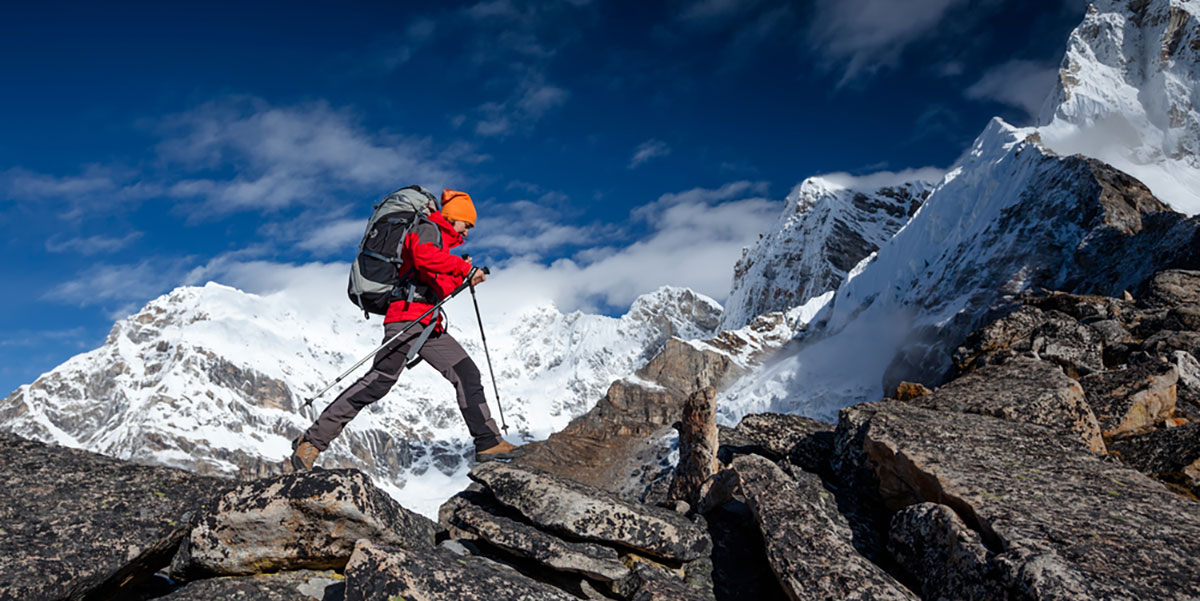
Some of us love a challenge to scale high terrains while others just simply enjoy the view of the calm majesty of nature’s finest creations; the mountains!
However, confronting high altitude is not easy. Not only does one need to have the strength and stamina to mount the steep slopes, one may also have to deal with altitude sickness.
Traveling to places of high altitudes can sometimes cause certain problems to health. Collectively, we call these problems altitude sickness. These problems may be broadly classified into three types:
Acute mountain sickness
This is common and typically causes symptoms similar to alcohol hangover.
High Altitude Cerebral Edema (HACE)
This is uncommon but more serious compared to acute mountain sickness and it involves swelling of the brain.
High Altitude Pulmonary Edema (HAPE)
This is uncommon but more serious compared to acute mountain sickness and it involves fluids building up in the lungs.
Altitude sickness can manifest as several symptoms, and the symptoms of acute mountain sickness, HACE and HAPE differ slightly.
Acute mountain sickness can happen within one to two days of traveling to a place of very high altitude. Some of the symptoms are
Headache
Tiredness
Light-headedness
Poor appetite
Trouble sleeping
Nausea, and sometimes vomiting
HACE on the other hand usually begins 1 to 3 days after traveling to a place of high altitude and some of the symptoms are
Weakness and feeling very tired
Difficulty in walking
Confused and irritable
Appearing “drunk”
HAPE, also usually begins 1 to 3 days after traveling to a place of high altitude and some of the symptoms are
Coughing
Feeling short of breath
Difficulty walking uphill

If you experience symptoms of acute mountain sickness, you should rest and stay at your current altitude until you feel better before proceeding to a higher altitude. You should recover within a day or two. It is useful to move to a lower altitude if your symptoms do not resolve within a couple of days.
However, if you experience symptoms of HACE or HAPE, then you should get help immediately and move to a lower altitude right away.
It depends. If it is acute mountain sickness, then it is not necessary. When faced with HACE or HAPE, then you should seek medical care as soon as possible as it is serious and may even cause death.
For acute mountain sickness, rest and staying at the same or lower altitude is the treatment. You may also take painkillers such as paracetamol, aspirin or ibuprofen to treat headaches associated with acute mountain sickness.
There are also prescription-only medications that may be used to treat the symptoms of acute mountain sickness. They are
Acetazolamide
This is a medication commonly used for glaucoma but may also be used to prevent and treat acute mountain sickness.
Dexamethasone
This is a type of steroid and it prevents symptoms of acute mountain sickness from getting worse and swelling of the brain.
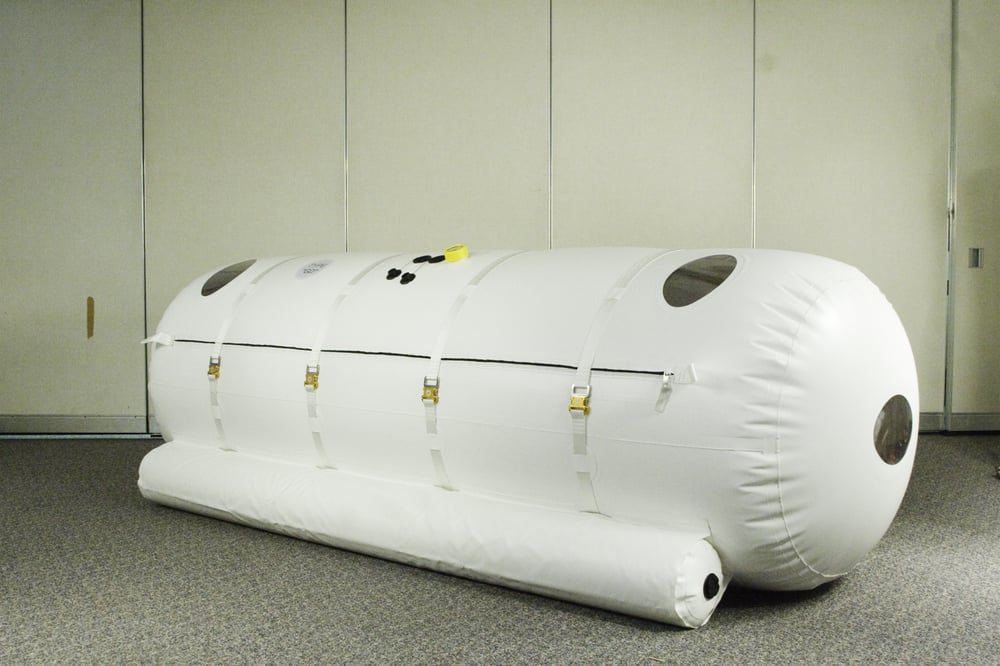
For HACE and HAPE, it is important to get help and go to a lower altitude immediately. If going to a lower altitude is not possible then you may be put into a pressurized inflatable bag called a “portable hyperbaric chamber” which simulates the air in a lower altitude.
A portable hyperbaric chamber
Yes, it can be prevented by moving to higher altitudes at a slower pace. This gives your body time it needs to adjust to the surrounding air conditions. Moving too quickly to high altitudes thwarts this. Some other tips include
Plan your trip wisely and stretch it out over a few days if you plan to ascend to a high altitude.
Avoid alcohol, sleeping pills and challenging physical activities for the first few days of ascending to high altitudes.
It the climb/hike involves spending a few nights in high altitude areas, consider going to a higher altitude during the day, then going back down to a slightly lower altitude to sleep at night.
You may consult a doctor prior to the trip and he/she may prescribe some medications for you to prevent altitude sickness.
Last but not least, travel safe and do not overstretch your body.
Download our Doc2Us app from Google Play Store or Apple Store and chat with a doctor now.
References:
DRUG INFORMATION HANDBOOK. (2018). [S.l.]: LEXI-COMP.
Kasper, D., Fauci, A., Hauser, S., Longo, D., Jameson, J., Loscalzo, J. and Harrison, T. (2015). Harrison’s principles of internal medicine. New York: McGraw Hill Education.
com. (2017). Patient education: Altitude sickness (including mountain sickness) (The Basics). [online] Available at: https://www.uptodate.com/contents/altitude-sickness-including-mountain-sickness-the-basics [Accessed 17 May 2018].
Image credit:
https://www.auxbeam.com/pub/media/magefan_blog/2018/10/Best-camping-lantern.jpg
https://www.charbonnetlawfirm.com/wp-content/uploads/2017/07/download.jpeg
https://s3-media4.fl.yelpcdn.com/bphoto/KJOn5Mcl6vLzNMJDZOxjxg/o.jpg
https://travelhealthpro.org.uk/media_lib/mlib-uploads/full/Altitude.jpg
In collaboration with Dosing Health.

Most Malaysians love a cup of ...

ADAKAH KITA BOLEH HAMIL KETIKA...

Image credit: Alvesgaspar,...

Do you have that pooping s...

Whether a pregnancy test t...

A toddler blinking hard or fas...