

Is a foamy urine normal?
Most Malaysians love a cup of ...
Feb 18, 2022
Most of the pharmacies in Malaysia sell a wide range of mouthwashes. With so many options out there, how can you choose the one that is right for you? And what are their differences anyway?
While the benefits offered by different types of mouthwash may overlap, they may differ in terms of their primary benefits. Nevertheless, it is important to recognise that no mouthwash is a substitute for routine oral hygiene measures, which should be based on the twice-daily use of a toothbrush and fluoride-containing toothpaste, together with some form of interdental cleaning.
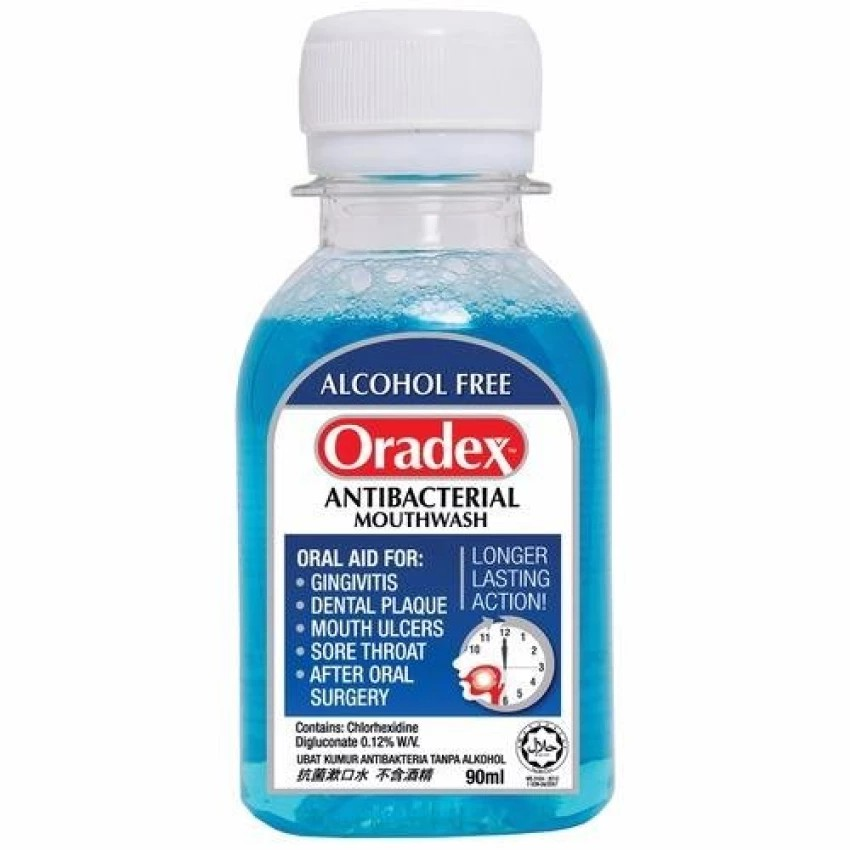
Antiseptic mouthwashes are those which contain chlorhexidine or hexetidine.
Image credit: Shopee. Oradex® contains chlorhexidine.
Image credit: Watsons. Bactidol® contains hexetidine.
Antiseptic mouthwash is primarily used to reduce or control gingivitis, plaque, halitosis (bad breath), tooth decay, mouth ulcers and sore throat. It is also commonly prescribed to patients who underwent oral surgery, where the bacteria in a surgical site cannot be reduced by other means or when brushing teeth is difficult. Chlorhexidine-containing mouthwash also has an interesting application: it can be used to prevent ventilator-associated pneumonia among patients on long-term intubation.
Chlorhexidine, at a low concentration, inactivates bacteria in the mouth by alteration of bacterial cell osmotic equilibrium and leakage of potassium and phosphorus.
However, chlorhexidine-containing mouthwash is not without side effects. Here are the common side effects associated with its use:
Staining of tooth surfaces, restorations and the tongue
Temporary changes in taste (dysgeusia)
Increased in tartar formation
Image credit: News Medical
Mouth dryness. This is due to the high concentration of alcohol in antiseptic mouthwash.
Burning sensation of the oral mucosa
Here are things you need to take note of using chlorhexidine mouthwash:
You should only use this mouthwash for a limited period of time.
The frequency and amount of chlorhexidine mouthwash may vary based on your reason for using the mouthwash. Clarify it with your dentist or doctor.
After rinsing, spit it out and do not ingest it.
Chlorhexidine should be used after brushing or teeth flossing. Don’t brush your teeth, rinse with water, or eat immediately after use.
Some people have periodontitis along with gingivitis. Chlorhexidine treats gingivitis, not periodontitis. You’ll need separate treatment for periodontitis. Chlorhexidine might even make gum problems like periodontitis worse.
The use of chlorhexidine isn’t a replacement for brushing your teeth, using dental floss, or regular visits to your dentist.
Children aged below 12 years old should not be using chlorhexidine mouthwash.
If you are pregnant or breastfeeding, inform your dentist or doctor before using chlorhexidine mouthwash.
As the name suggests, plaque-inhibiting mouthwashes are used primarily to reduce plaque, thereby preventing tooth decay. Plaque-inhibiting mouthwashes contain various ingredients such as:
antimicrobials (eg, cetylpyridinium chloride),
agents to prevent bacteria adhering to tooth surfaces (eg, the amine alcohol delmopinol hydrochloride) and
essential oils (eg, thymol, eucalyptol, and menthol together with methyl salicylate).
Image credit: Product Nation
Image credit: Watsons
Plaque is a biofilm formed by colonising bacteria. The ingredients in plaque-inhibiting mouthwashes act on these bacteria by disrupting the colonisation process.
There are no significant benefits of the sole use of these mouthwashes -- they have to be coupled with diligent oral hygiene procedures. They are typically recommended for routine use, ideally, twice a day, coupled with thorough brushing and careful teeth flossing. It is encouraged to use the mouthwash at times different from tooth brushing, as this can retain the benefits of both the mouthwash and the fluoride in the toothpaste.
Image credit: economic times
Unlike chlorhexidine mouthwash, plaque-inhibiting mouthwash is meant for ongoing and long-term use. There are alcohol and alcohol-free options available to choose from. Plaque-inhibiting mouthwashes are good at giving users an agreeable feeling of mouth freshness but they have not been found to be effective as a sole means of controlling bad breath.
These mouthwashes contain fluoride, which helps to prevent tooth decay and can also be used to help reverse early lesions of dental caries. Preventive mouthwash is commonly recommended to:
Individuals with a higher risk of dental caries, such as people who consume sugar frequently
xerostomia (dry mouth due to reduced or absent saliva flow)
Individuals who are undergoing orthodontic treatment or with fixed braces
Image credit: TruBlu Dentistry
It is always recommended that preventive mouthwashes are used as together with twice-daily brushing with a toothpaste containing fluoride and, where appropriate, teeth flossing. Unless specified differently in the manufacturer’s directions for use, these washes and rinses should be used for one minute and then spat out.
Similar to the verdict in plaque-inhibiting mouthwash, a fluoride mouthwash should be used at different times to toothbrushing — an approach which may seem strange at first but improves effectiveness. And, to further maximise effectiveness, it is advised not to eat, drink or rinse the mouth for 30 minutes after rinsing with fluoride mouthwash.
Cosmetic mouthwashes have been gaining traction among Malaysians recently. The active ingredients of these mouthwashes are usually hydrogen peroxide or carbamide peroxide.
Hydrogen peroxide is essentially a bleaching agent in many professional teeth-whitening products, but it can damage your teeth enamel if used without appropriate protective equipment. As a result, you may experience teeth sensitivity. The risk of damage is also increased if you use a very strong hydrogen peroxide solution, leave the hydrogen peroxide on your teeth longer than it should and apply it more than once daily.
More serious adverse effects of hydrogen peroxide include inflammation of the teeth roots in the gum, which can lead to infection and is expensive to treat.
Image credit: Pharmaceutical Journal
Read more:
Cover image credit: healthline

Most Malaysians love a cup of ...

ADAKAH KITA BOLEH HAMIL KETIKA...

Image credit: Alvesgaspar,...

Do you have that pooping s...

Whether a pregnancy test t...

A toddler blinking hard or fas...